About
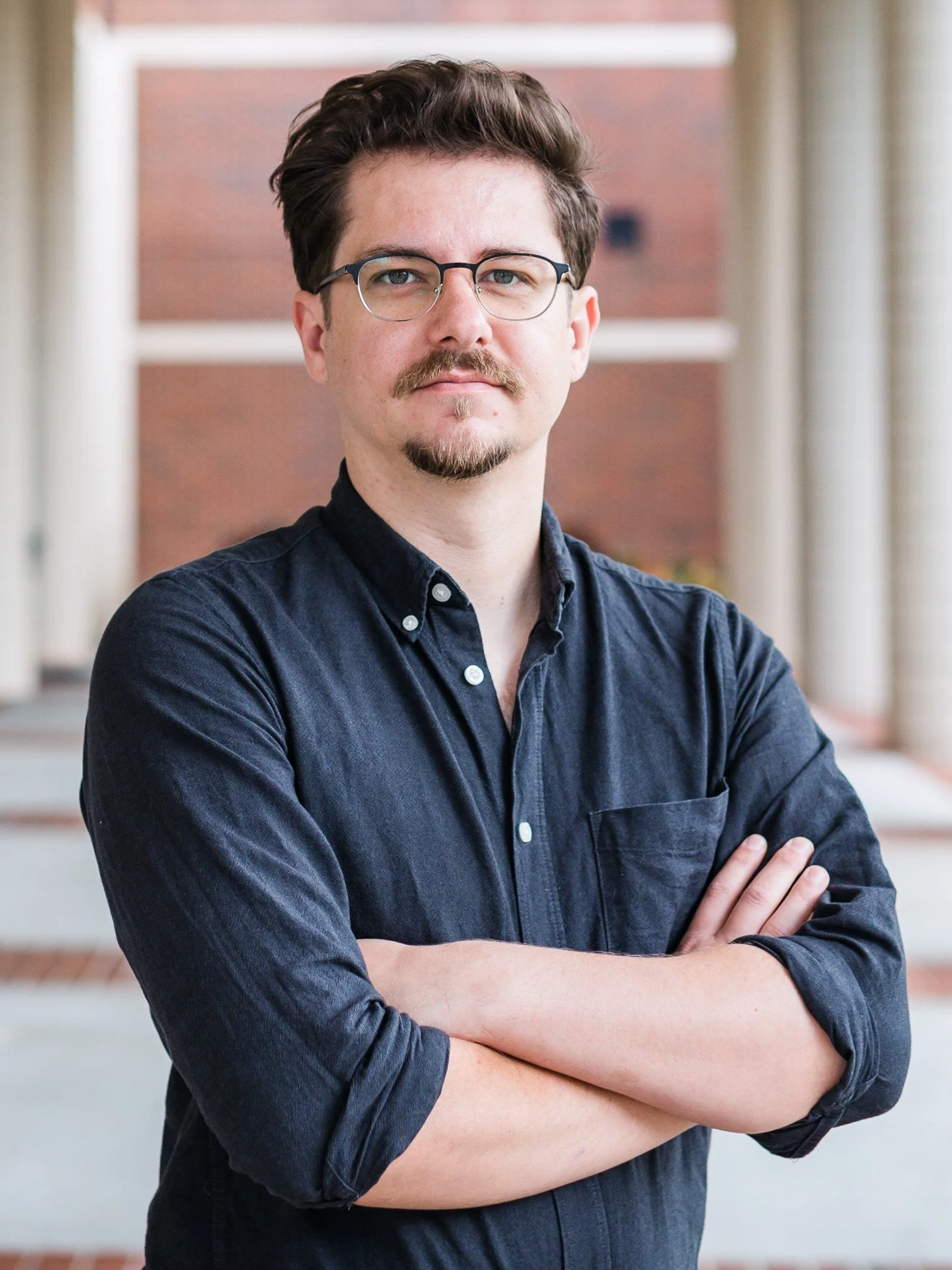
Nicholas Kalemba is a contemporary painter living and working in Orlando, FL, where he graduated with a BFA in 2016 and an MFA in 2019 from the University of Central Florida. Specializing in acrylic and oil painting on a large-scale, he works as a muralist, studio painter and instructor of drawing, painting and sculpture. His work has been exhibited in over 25 group and juried exhibitions regionally and locally, where he has won multiple awards and recognitions, including a two-year residency at the Maitland Arts and History Center from 2019-2021.
My work is a reaction to the bombardment we all experience from visual imagery, and my own autobiographical experience with news media, advertisements, memes, video games, art history, my daily surroundings, film and mythology; they are all players or characters on the stage of a painting. There’s this vast range of imagery that we all have consumed and been shaped by over a lifetime, ranging from profound, meaningful images and information all the way down to disposable imagery. When I consider this oversaturation of imagery at this point in time, all of the things that are traditionally valued in art-making; things like depth, coherence, originality, authenticity and meaning itself seem to be dissolved amid those empty swirls of imagery. Amidst this deluge of visuals, there lies an opportunity for introspection, innovation, redefinition and debate.
Incorporation of copyrighted media in my artwork is a deliberate, critical strategy used to examine and question the nature of ownership in visual culture. In a world saturated with images, many of which are widely circulated, shared, and repurposed, the boundaries between original creation, reproduction, and ownership have become increasingly blurred. By recontextualizing copyrighted material, I aim to highlight how meaning is not static but constantly reshaped through context, usage, and interpretation.
This work engages with traditions of appropriation, where existing media is used not as theft, but as commentary in order to interrogate systems of power, authorship, and commodification. The presence of recognizable imagery prompts viewers to reflect on their own relationships to these images: how they consume them, what value they assign to them, and who is deemed to "own" cultural expression in a digital, postmodern landscape.
In using the format of collage or contemporary landscape, my paintings incorporate a wide array of iconography and imagery, while adding commentary through their juxtapositions. I’m endlessly fascinated by manifesting debates in my paintings. The debate between meaning and the impossibility of meaning is one such debate. Another, more internal debate I have with the work is the question of: How does one push the language of art making forward, without losing the visual grammar that simply makes great art great?